
My “why” for teaching and learning is centered on how the 4 Cs can be used to support student growth and engagement in my classroom. I believe skills connected to creativity, critical thinking, communication, and collaboration must be skills that students practice throughout the process of learning.
I have long believed that my content should support the development of student skills connected to the 4 Cs of collaboration, communication, critical thinking, and creativity.
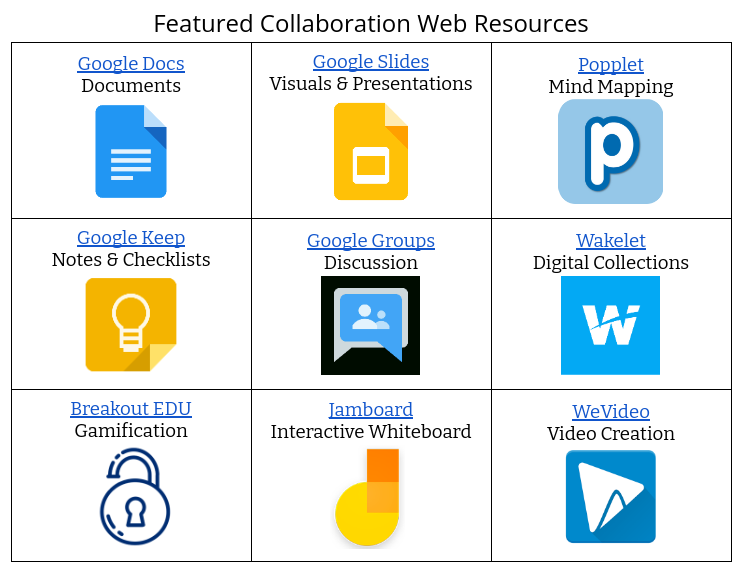
Today, I wanted to share our updated collection of digital resources to support personal and digital collaboration skills in our classrooms.
Have an additional resource or want to share how you use one of the resources?
Visit our Collaborative 4 Cs Wakelet Collection to share.

- Get link
- X
- Other Apps
Labels
__suhuuu__ __suhuuu__ SUHANA KHAN rimpi31 rimpi31 Sneha Karmakar vikram._.78 vikram._.78 𝙸𝚃𝚉 💁♂️ 𝕍𝕀𝕂ℝ𝔸𝕄 _allison_fiona_ _allison_fiona_ Fiona Allison sharwari_gujar sharwari_gujar Sharwari Gujar jaya.ahsan jaya.ahsan Jaya Ahsan rivvikamani24 rivvikamani24 Rivvika Mani praju_starlet praju_starlet Prajakta Dusane nikitasharma_official nikitasharma_official Nikita Sharma nehamalik335 nehamalik335 Nehhaa Malik _hiral_radadiya_ _hiral_radadiya_ Hiral Radadiya honeyroseinsta honeyroseinsta Honey Rose sayani_pradhan sayani_pradhan SAYANI PRADHAN . . aylighiya aylighiya Ayli Ghiya _laakshi_ _laakshi_ Laakshi Pathak kabukcumelisa kabukcumelisa Melisa Kabukçu fit_shivi fit_shivi shivi akadanidaniels akadanidaniels Dani Daniels itzmemithuvigil itzmemithuvigil Mithu vigil c_muay_s c_muay_s Muay renurathod_30 renurathod_30 Renu Rathod club.nights_ club.nights_ 🔥 Night Life 🔥 auroraa.s3 auroraa.s3 aurora ♡ divashu1336 . divashu1336 DIVA♡ . charmaine_maristela charmaine_maristela Cha Mia 🥀🇵🇭 siimran_siingh siimran_siingh Simran Singh panktishah24 panktishah24 Pankti Shah 🐇🍷 deshnadugad5 deshnadugad5 DESHNA DUGAD utkarsha_raturi utkarsha_raturi UTKARSHA RATURI kashish_lifts kashish_lifts Kashish 802_ri 802_ri Riya malawat arshita_rana44 arshita_rana44 ✈️ARSHITA✈️ rohityson_ rohityson_ Rohit Nair ketektiktok mascha.lagnia mascha.lagnia 𝔸𝕣𝕞𝕡𝕚𝕥 𝔸𝕟𝕘𝕖𝕝𝕤 sai_sanvi_77 sai_sanvi_77 सई pitshub_22 pitshub_22 Lord 2nd Tobirama Senju kashuwuwuw kashuwuwuw kashu budhani twinkle_physique04 twinkle_physique04 Twinkl Chourasia roop_durgapal roop_durgapal Roop Durgapal marvelousgirls_ marvelousgirls_ Fantastic Sexy Girls financially_aware__bharat_ financially_aware__bharat_ indocelebpit2 indocelebpit2 Indonesian Celebrity Armpits 2 official_malhotrataniaa official_malhotrataniaa Tania Malhotra | Fitness michiko21.02 . michiko21.02 Saranporn saelim . iaditipandit iaditipandit Aditi Tripathi🐣❤️ ___swanuuuuu.31 ___swanuuuuu.31 𝐒𝐖𝐀𝐍𝐀𝐍𝐃𝐈 💗 manasinaik0302 manasinaik0302 Manasi Naik technoanshul technoanshul Anshul | TECH bhabhiji_official bhabhiji_official Bhabhi Ji 🌺 niks_v121 niks_v121 Nikita vaid carolvalhate carolvalhate Carol Valhate shriti254 shriti254 SHRITI SINGH actressverse actressverse Actress Fan nightclubindia.in nightclubindia.in Night Club India 🥂 bangalore_club bangalore_club Banglore Club & Nightlife nandita_duttaofficial nandita_duttaofficial Nandita Dutta yourmadhuu yourmadhuu M A D H U imritikapandey imritikapandey Kumari Ritika radhikamaroo radhikamaroo Radhika Maroo diva_parna diva_parna diva_parna rimpihere rimpihere Sneha Karmakar official.black.bubble official.black.bubble 𖤓 𝓞𝓪𝓼𝓲 𝓓𝓪𝓼 𖤓 samsamy_321 samsamy_321 Samy pavreet15 . pavreet15 Pavneet kaur . priyanka.sharma.22 priyanka.sharma.22 Priyanka Sharma prachitomar_007 prachitomar_007 Prachi riyachatterjee121099 riyachatterjee121099 Riya Chatterjee vismitasood vismitasood • Vismita Sood 🧿 fitness_queen_divya fitness_queen_divya Divya bhatt fitwoman99 fitwoman99 Fit Woman 💪💪 turn_tolight turn_tolight Rosy blr_nightclubs blr_nightclubs Bengaluru Night Clubs palakkrishn palakkrishn Palak piyali_11 . piyali_11 Piyali . biswaspooja036 biswaspooja036 Pooja Biswas priyagamreefame priyagamreefame Priya Gamre sassy_poonam sassy_poonam Sassy poonam bhindeshitara_ bhindeshitara_ CHIRASREE (monami) | Model pratika_sood pratika_sood Pratika Sood aditimistry2607 aditimistry2607 Aditi Mistry❤️🔥 ankitadave_1 ankitadave_1 Ankita Dave 🐯 nehasingh9902 nehasingh9902 Neha Singh symrann.k symrann.k Simran Kaur rawanelbadawyy rawanelbadawyy Rawan Elbadawy ♛ anne.ysharma anne.ysharma livleen eshabhattarai01 eshabhattarai01 ESHA BHATTARAI mini_jkaur mini_jkaur Mini_Jkaur (lioness)👑 muskan_bhat45 muskan_bhat45 Muskan Bhat nikyyy_5 nikyyy_5 𝓝𝓲𝓴𝓲𝓽𝓪 𝓟𝓪𝓷𝓬𝓱𝓪𝓻𝓲𝔂𝓪 🖤🔥 samaira.jain_123 samaira.jain_123 Sammaira Jain indian.web.shows indian.web.shows Indian Web Shows sweaty.lover sweaty.lover Sweaty Sweating juhi.vyas8 juhi.vyas8 Dr. Juhi Vyas riya_kashyap7682 . riya_kashyap7682 Madhu Kumari 🦋 . sanjana.sarathy sanjana.sarathy Sanjana 🧿 arkestamasti.in arkestamasti.in ☠♡ 𝐀ⓡᛕεsⓣ𝕒𝕞𝔸รᵗί 🐚♪ fitgirl_kajalgouswami fitgirl_kajalgouswami Kajal Gouswami diya_unp07 diya_unp07 D.I.Y.A geetabhosale_13 geetabhosale_13 Geeta Bhosale🇮🇳 lekhaprajapati lekhaprajapati Lekha Prajapati 💫 fittalknaman fittalknaman Fit talk with Naman 🇮🇳 kkhushshah kkhushshah Khushbu kirtyyyagarwal kirtyyyagarwal Kirty Agarwal sanjanasingh_official . sanjanasingh_official Sanjana Kalra . twinkle.sharmaa twinkle.sharmaa TWINKLE SHARMA shweta.tiwari shweta.tiwari Shweta Tiwari sagarika.055 sagarika.055 Sagarika sen vansheen_sumbriya vansheen_sumbriya Vansheen vermA prakritipavani prakritipavani Prakriti Pavani ♛ realamesha realamesha Arisha Begam (Amesha G) roshniwaliaa roshniwaliaa Roshni Walia moodybeasty moodybeasty Nidhi Goel ⭐ __renu__chandra __renu__chandra Renu Chandra sassy.actress sassy.actress Sassy Girl 💕💖💖💖 tims_island tims_island Timsy Jain navel_lovers navel_lovers sadiieray sadiieray sadie ray 🫶🏻 vijeta_1011 vijeta_1011 Beauty muktigautam muktigautam Mukti Gautam drnitika.anand drnitika.anand Dr. Nitika | Fitness & Lifestyle kashishrai_0 kashishrai_0 Kashishrai.🤍 palaksethi422 palaksethi422 Palak Sethi kainthhkaur kainthhkaur Harshdeep Kaur shikhanagpal10 shikhanagpal10 . SHIKHA 💫 anchorpiya17 . anchorpiya17 Piya Sharma iredproductions iredproductions iRed Productions simranmehta738 simranmehta738 Simran Mehta sejal__mehta15 sejal__mehta15 🫰 jyoti_pulani65 jyoti_pulani65 jyoti pulani pragyujain pragyujain Pragya☆ manvi.badyal__ manvi.badyal__ DR. MANVI BADYAL(PT) vidhish.a vidhish.a Vidhisha Garg suhawana_raj_gariya suhawana_raj_gariya Suhawana Raj Gariya ketektiktok- Get link
- X
- Other Apps
Comments
Post a Comment